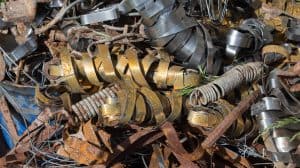

You have got a pile of copper in the garage, the back of the truck, or the corner of a job site, and somebody told you it is all “just copper.” It is not. Around Long Island, the same pound can pay noticeably different amounts depending on how it is graded. The difference between bare bright, #1 and #2 comes down to how clean the metal is, not how good it looks from across the yard.
Below, we will cover what each grade means, what the gap costs you on a real load, and what to do before you drive over to our Holbrook location. First, the basics of how the grades work.
How Scrap Copper Gets Graded At Long Island Yards
Yards in Nassau and Suffolk price copper against the broader market, and grade decides how far below that market you land. Bare bright sits closest to the top. Each step down widens the discount, because the mill has more cleaning and refining to do. Price follows purity.
Most yards work from the same industry framework, the ReMA scrap specifications, which used to be called ISRI. The catch is that yards apply those specs a little differently. Some do not run a separate bare bright class at all. So treat the definitions below as common ground, and ask us how we grade before you unload.
What Makes Copper Bare Bright, And What Drops It To #1 or #2?
Bare bright is the top shelf, and it is wire only. Think of building wire stripped clean of its insulation: bare, shiny, no coating, no oxidation, no solder, nothing attached. It runs about 99% copper or better, and it is generally 16 gauge or heavier. If it is dull, tarnished, or thin, it is probably not bare bright, however good it looks.
#1 copper is clean copper in heavier or solid forms. Clean tubing, pipe, bus bar, clippings and heavy-gauge wire all land here. A light tarnish is fine. Solder, paint and fittings are not. Pipe is the usual surprise, since many sources say pipe can be #1 but never bare bright, even when it is spotless.
#2 copper is where the contamination shows up. It needs roughly 94% copper at minimum, and it covers plumbing pipe with solder joints, painted or oxidized pieces, enameled wire, motor windings and thinner wire. Plumbers, electricians, HVAC techs and demolition crews tend to produce most of it, because jobs rarely leave you with a clean, single-grade pile.
One quick check before you sort: a magnet. Copper is not magnetic, so anything that sticks is not copper and does not belong in the pile. And skip the burning. Burnt copper is a common reason yards turn material away, and it is not safe anyway.
How Much Does One Grade Cost You On 100 Pounds Of Copper?
Here is the part people tend to underestimate. Prices move daily, so take this as an example and not a quote. On a recent Crestwood Scraps price board, bare bright copper was $4.10 per pound, #1 copper was $3.85, and #2 copper was $3.50.
Run that on 100 pounds and you get $410 as bare bright, $385 as #1, and $350 as #2. That is a $60 gap between the top and bottom grade on a load you could carry out of a basement in a couple of trips. Put another way, #1 usually sits about 6 to 7% under bare bright, and #2 about 15% under. Those ratios hold up from yard to yard better than the dollar figures do.
So the cost of misgrading, or of tossing everything in one bucket, is real. If you dump clean pipe, solder-jointed pipe and a few stripped wires together, the load gets weighed and priced as the mix it is. Sorting beforehand gives each piece a fair shot at its own grade.
Because the board changes, check our live pricing page for today’s numbers before you load up. And remember, #2 is not junk. It is still valuable copper that simply carries solder, paint or oxidation, which is why we would rather see you bring it in sorted than not at all.
Sorting And Prepping Copper Before You Drive To Holbrook
A little prep at home saves you a lot at the scale. Keep ferrous and non-ferrous separate, which a magnet makes easy. Then split your copper by grade: wire in one pile, pipe in another, anything with solder, paint or fittings in a third.
Brass, copper-aluminum radiators and flashing each have their own line on our board, so keep those out of the copper pile too. When you bring it in, we weigh and assess your material and offer a price based on current market rates. You can drop it off at 1100 Lincoln Ave. in Holbrook, or arrange a pickup if the load is too much to haul yourself.
Is It Worth Stripping Copper Wire Before Selling It On Long Island?
This is the question electricians and renovation DIYers argue about most, and the honest answer is that it depends on the day and on your time. Insulated wire is priced by how much copper is inside, and the numbers show why people wonder. On that same price board, bare bright was $4.10 per pound while THHN was $2.55, Romex was $2.05, and house wire at 30% to 40% recovery was $0.85.
That is a big spread, and it explains why stripping is tempting. But it is a spread you earn with hours of work, and not all of that wire ends up as bare bright anyway. Thin conductors may fall short of the 16 gauge or heavier mark, and any nicks, coatings or leftover insulation can knock a strip job down a grade.
A rough way to think about it: if you have got a few feet of heavy wire, stripping might be quick and worthwhile. If you have got a few hundred pounds of Romex from a Nassau County kitchen gut job, the time you would spend could be worth more on another job. A contractor billing out by the hour will usually come out ahead selling it insulated, while a homeowner with free weekends might feel differently.
We cannot promise stripping pays on any particular day, because the board moves. What we can do is tell you where your wire will land as-is, and let you do the math with real numbers in front of you.
What Do Nassau And Suffolk Sellers Ask Most About Copper Grades?
The first question is usually some version of “will you call my #1 a #2?” Fair worry. Our answer is to sort first, ask how we grade, and compare it against what is posted on our price board. Grades are defined in industry specs, but yards differ in how they apply them, so a straight conversation before you unload beats a surprise afterward. Our customers often tell us the people at the scale are helpful and professional, and we want that conversation to feel easy.
Next up is if copper pipe can be sold as bare bright. Generally no. Pipe is typically #1 when it is clean and #2 when it has got solder, fittings or paint. That is common across Long Island, where many older homes in Nassau and Suffolk have been re-plumbed or renovated and the old pipe comes out with fittings still attached.
People also ask how to tell copper from brass. Copper has that reddish, salmon look, while brass leans yellower, and a magnet will not grab either one. If you are not sure, bring a sample and ask.
Finally, there is “what do I bring, and do you do pickup?” We do both drop-off and pickup, and we are open Monday through Friday from 7:00am to 4:45pm and Saturday from 7:00am to 1:45pm, which works for weekday contractors and weekend cleanouts alike. Call 631-567-2727 to confirm hours and ask what to have with you. We started in Hewlett in 1955 and moved to our 5-acre Holbrook yard in 1970, so we have seen plenty of loads from both counties, and we operate as a true industry wholesaler with equipment that lets us handle material many yards cannot.
Selling Scrap Copper On Long Island: Know Your Grade, Get Paid Right
Here is the short version. Bare bright is clean, bare wire. #1 is clean, heavier copper like tubing and pipe. #2 is copper with solder, paint or oxidation. Each step down costs you roughly 6 to 7% and then about 15% per pound, which adds up quickly across a load. Sort before you come, skip the burning, and ask how we grade.
Call Crestwood Scraps at 631-567-2727 today to verify current copper prices and schedule your drop-off or pickup in Holbrook, NY.