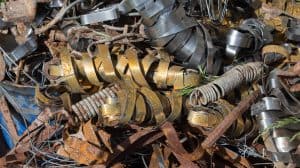

If you manage a building, run a crew, or keep a shop going in Nassau or Suffolk county, you probably have a corner somewhere that is slowly filling with metal. Old copper pipe, aluminum offcuts, a retired air handler, spools of wire nobody wants to deal with. It is worth money, and it is also in the way.
The hard part usually is not deciding to move it. It is not knowing who will come get it, how the weighing works, and if you will walk away feeling shorted. We have been picking up scrap across Long Island for over 50 years, so here is how commercial scrap metal pickup works, plainly.
How Commercial Scrap Metal Pickup Works On Long Island
Pickup is simple at its core. Instead of loading your truck and driving to a yard, we come to you. For a business on Long Island, that means fewer lost hours and no gambling on traffic. Anyone who has tried to cross the Long Island Expressway at the wrong time knows why it picked up the nickname “The World’s Longest Parking Lot.”
It also helps when space is tight. Many Nassau County properties do not have room to let metal sit for weeks, and Suffolk businesses are often spread out enough that a drop-off run eats half a day.
Convenience is easy to promise. What matters is if the process is clear enough that you trust it, so here is what ours looks like.
What Happens Between Your Call And The Final Weigh-In?
It starts with a phone call to 631-567-2727. Tell us what you have, roughly how much, and where it is sitting. A stack of aluminum extrusions behind a Bohemia warehouse is a different job than copper tubing and wire from a renovation in Farmingdale, and we would rather know that before anyone rolls out.
We will tell you what to keep separate ahead of time and work out the pickup details around your site, because one script does not fit every job.
Once the material reaches our yard in Holbrook, it is weighed and graded. Those two things drive every payout: how much you brought and what grade it is. Our staff walk you through both, and it is one of the things customers mention most often in their reviews. If a load comes in lower than you expected, you should hear why in plain words, not get a shrug.
Then there is paperwork. New York requires scrap processors to record purchases of $50 or more, including the date, the seller’s name and address, an ID number, and the type and quantity of what was bought. Those records have to be kept for three years, and a copy of the seller’s photo ID for two. Any legitimate yard will ask for this.
For a business, that is a good thing. It protects you from any question about where the material came from, and it gives your bookkeeper something to file. Have your business details and ID handy and it is a short step. We will also confirm how and when you get paid up front, so there is nothing left to guess at once the truck is loaded.
How Do You Get Paid More For Commercial Scrap Metal?
Sorting is where most of the extra money in a commercial load hides, and it costs you a few bins or pallets and a little time. We pay by grade, and a mixed load usually gets paid at the lower one. If clean aluminum is tossed in with steel brackets and painted fittings, the whole pile can get treated as the cheaper material.
A few habits make a real difference. Keep clean metals apart from dirty ones. Strip off plastic, rubber, and other non-metal attachments where it is practical. Keep insulated wire separate from bare wire, because they are different grades. And if you have copper that has gone dull or green, do not be surprised if it is not paid as bright copper, since oxidation changes the grade.
Aluminum is what we know best, and it is worth a mention. According to the Recycled Materials Association, more than 80% of U.S. aluminum production comes from recycled sources. That steady demand is why there is a real gap between a clean, sorted aluminum load and a sloppy one.
Think about who generates this stuff on Long Island. An electrician pulling wire out of a Hauppauge office build-out, an HVAC crew swapping out coils, a property manager clearing a basement in Hempstead. They all end up with a mix, and sorting it takes less time than most people expect.
You do not need to be perfect. If you are not sure what something is, ask before it goes in the pile. We would rather spend a minute on the phone than watch a good load lose value over a guess.
Why Long Island Businesses Compare Scrap Yards Before Calling
Long Island has no shortage of scrap yards, and that works in your favor. You can call around, compare, and drive to a different yard if the answers do not sit right. The trouble is that every yard says some version of “we pay well,” and that is almost impossible to judge over the phone.
What you can judge is how a yard handles your questions. Do they ask what you are moving? Will they explain how weighing and grading work before you commit? Do they give a small contractor from Medford the same attention as a big account? Do they tell you what paperwork to expect? Those answers tell you far more than a promise about price ever will.
What Does Selling To A True Industry Wholesaler Mean For You?
Most people picture a scrap yard as a place that buys from the public and sells down the line. We do that, but we also operate as a true industry wholesaler. We buy material from other scrap recyclers across the country and from government entities, too. We have been at this since 1955 and in Holbrook since 1970, and the equipment and technology we have invested in lets us process material beyond what most other recyclers on Long Island can handle.
Why does that matter to you? Because commercial scrap is rarely tidy. One cleanout can include aluminum, copper, brass, stainless, insulated wire, a few old computers, maybe some nickel alloy or titanium from a manufacturer’s floor. Buying at wholesale scale means we know where each of those goes, so one call can cover a mixed load instead of sending you off to find a home for the leftovers.
Customers describe our yard as clean and organized, and one called it by far the cleanest scrap yard they have seen. Reviewers mention our staff for being helpful and patient about explaining how pricing works. One customer has been bringing us aluminum for more than ten years.
We also operate under strict air quality and emissions standards, which can matter if your company pays attention to who it does business with. Customers call our pricing competitive and transparent, and we would like you to be able to check the math rather than take our word for it.
Can Businesses In Nassau And Suffolk County Get Scrap Metal Picked Up?
Yes. We offer pickup for businesses across Nassau and Suffolk county, and we take drop-offs at our yard at 1100 Lincoln Ave. in Holbrook. How a pickup gets set up depends on your material and your site, so call 631-567-2727 and we will go through it together. A Hempstead storefront and a Hauppauge manufacturing floor do not need the same plan.
Is your load too small or too mixed? Probably not, but we will not hand you a minimum here that we would have to walk back later. Tell us what you have and you will get a straight answer. Mixed loads are fine; we will simply explain how they are graded.
Can it not just go out with the recycling? Most municipal guides say only food and beverage cans belong in curbside bins. Larger pieces, wire, and fittings belong at a scrap yard.
What is it worth per pound? That depends on the metal, the grade, and where the market is that week, so give us a call with the details and we will talk through real numbers.
Our Holbrook yard is open Monday through Friday from 7:00 a.m. to 4:45 p.m. and Saturday from 7:00 a.m. to 1:45 p.m. We are closed Sunday. For many Suffolk businesses, Ronkonkoma, Patchogue, Islandia, and Medford are all within roughly eight miles, so a drop-off is a short trip.
Ready To Schedule Scrap Metal Pickup On Long Island?
Moving commercial scrap shouldn’t cost you a morning on the LIE or leave you wondering how the payout was figured. Call Crestwood Scraps at 631-567-2727 today to schedule your commercial scrap metal pickup on Long Island.